The need
The need is a programmable force
Cells rely on mechanical forces to perform routine biological functions. Researchers need tools that deliver them on demand, without redesigning the experiment around equipment.
We build ultrasound mechanostimulation platforms and devices that integrate with standard cell cultureware and apply programmable, non-contact mechanical stimulation to 2D and 3D culture models.
Cells rely on mechanical forces to perform routine biological functions. Researchers need tools that deliver them on demand, without redesigning the experiment around equipment.
Existing approaches are contact-based, workflow-intensive and difficult to scale across the standard cell cultureware and devices researchers already use.
Low-frequency ultrasound (LFU) attenuates less and penetrates deeper, delivering uniform mechanical stimulation across 2D and 3D culture platforms.
Mechanostimulation hardware built around the culture plates and dishes your lab already uses — plus an apparatus for watching cells respond in real time.
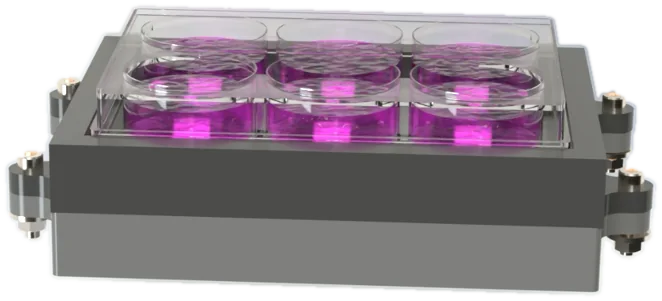
The platform delivers controlled mechanostimulation to cell samples cultured in a standard 6-well culture plate. The culture wells sit directly above an array of piezoelectric transducers, with an acoustic coupling gel maintaining uniform contact between each transducer face and the base of the well above it.
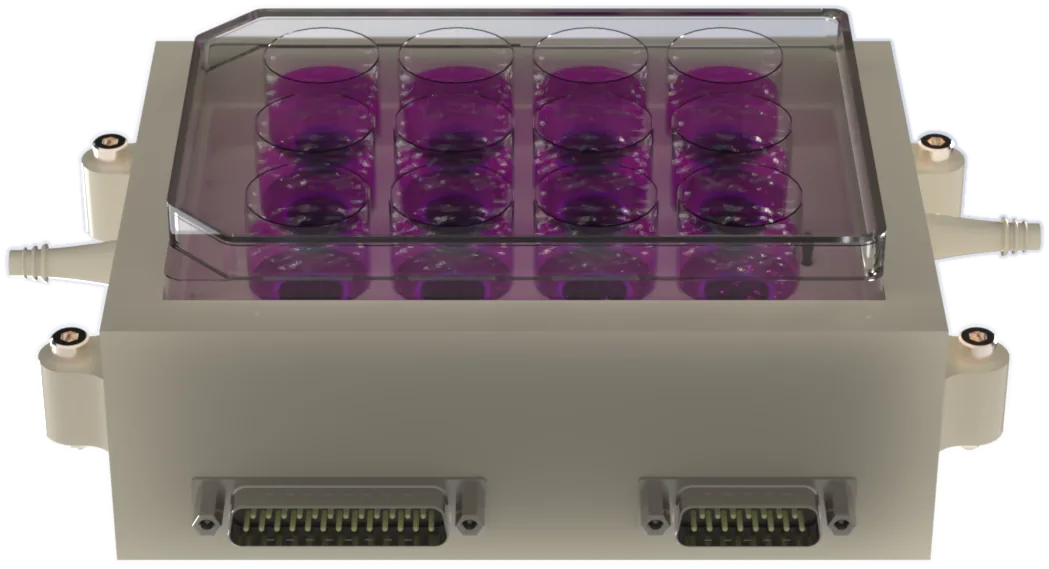
The platform delivers controlled mechanostimulation to cell samples cultured in a standard 12-well culture plate. The culture wells sit directly above an array of piezoelectric transducers, with an acoustic coupling gel maintaining uniform contact between each transducer face and the base of the well above it.
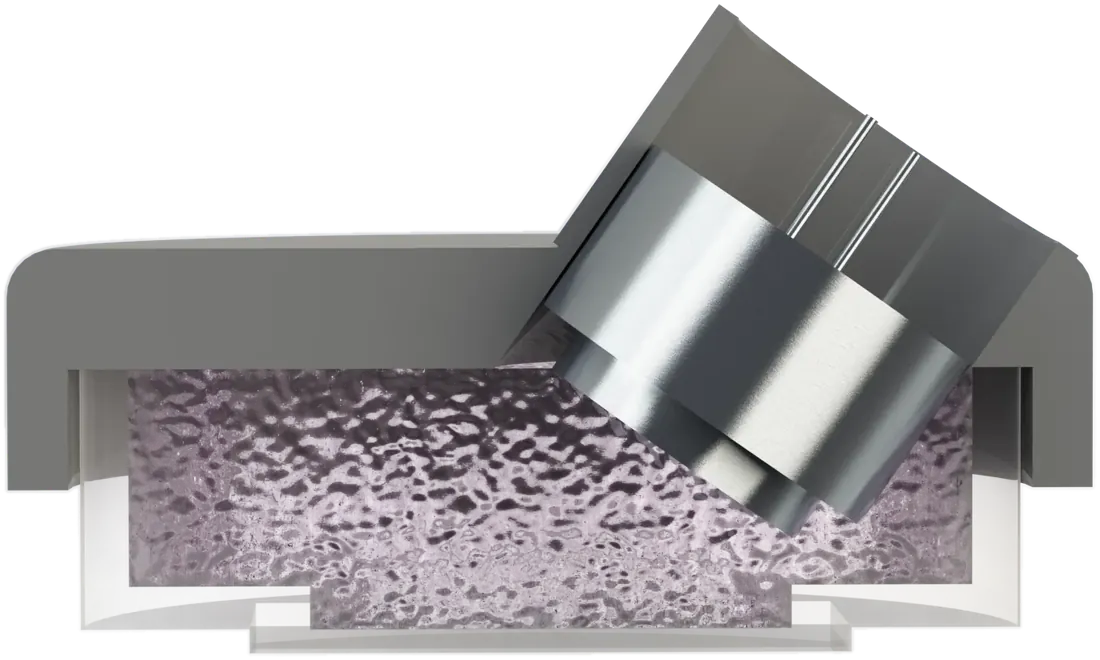
The apparatus enables simultaneous mechanostimulation and real-time microscopic imaging of cells. It is compatible with standard culture dishes, inverted microscopes, upright imaging configurations and stage-top incubators, supporting prolonged live-cell experiments.
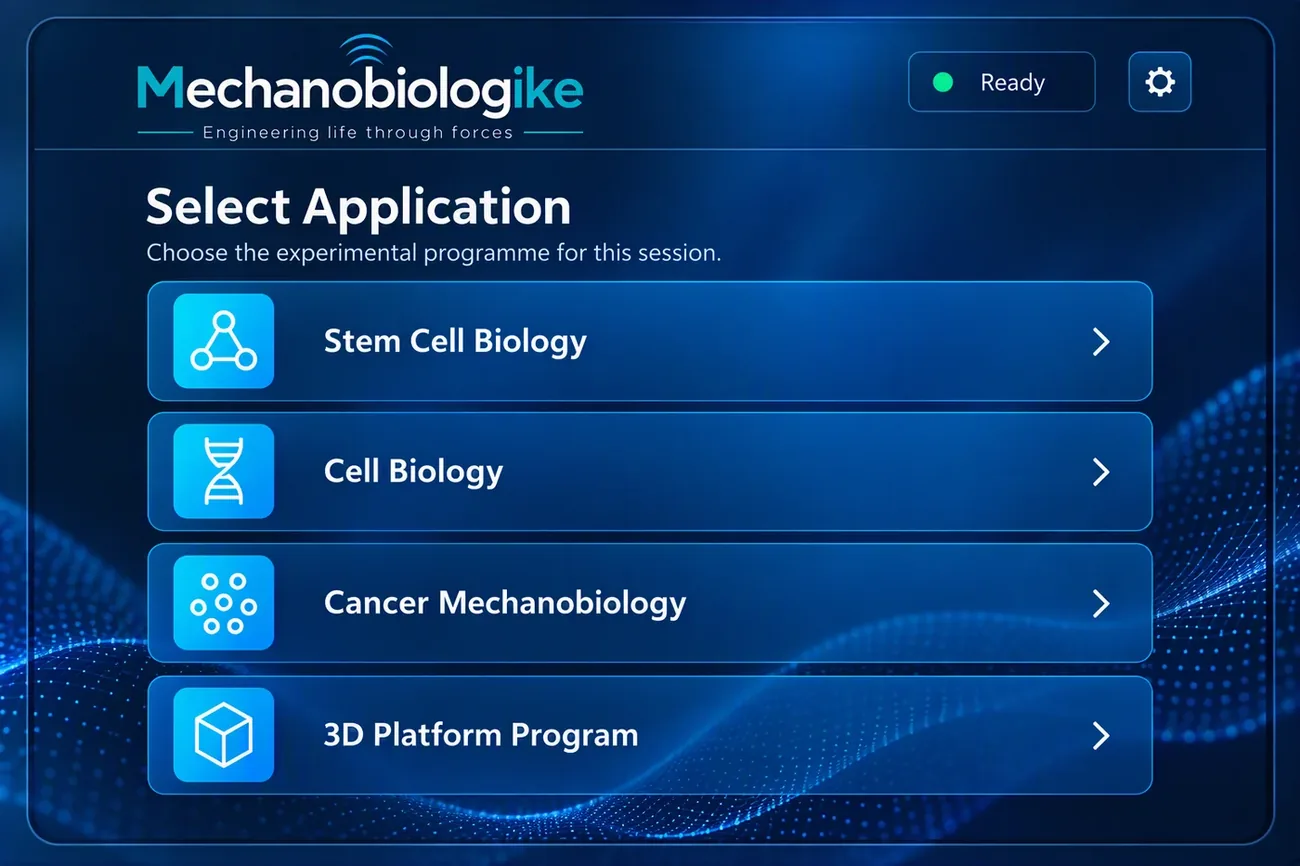
The intuitive user interface enables researchers to select application-specific programs for stem cell biology, cell biology, cancer mechanobiology, regeneration and 3D platforms. A clean visual layout, real-time system status, and streamlined navigation support efficient experimental setup, helping users operate the platform confidently with minimal training requirements.

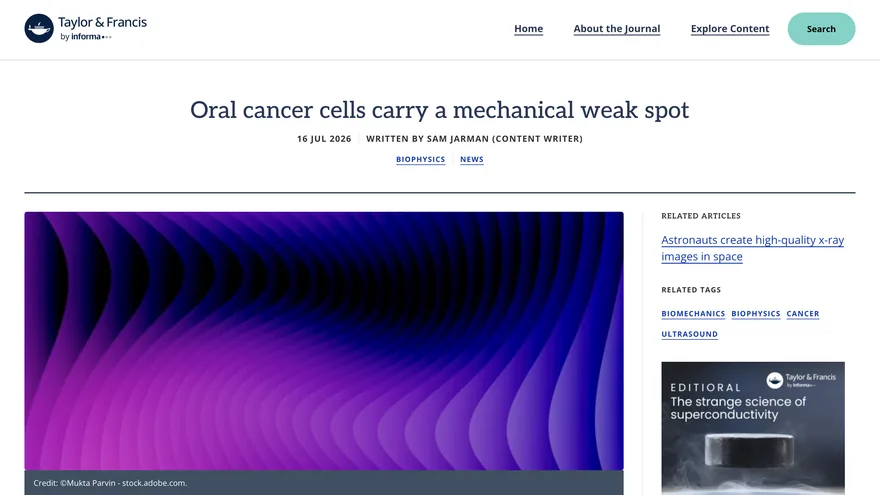
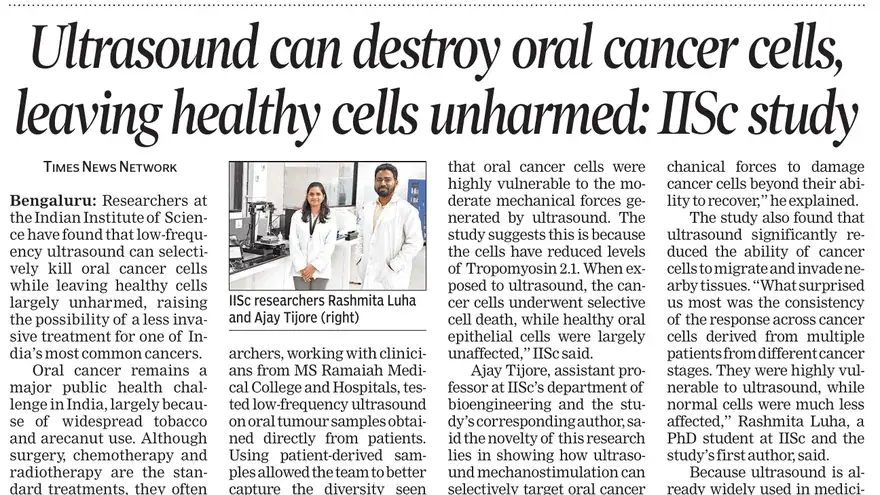
Coverage of our low-frequency ultrasound work on oral cancer.


Director and Founder

Director and Founder

Founder and Technical Advisor
We are open to research collaborations and pilot deployments.
Indian Institute of Science (IISc)
Bangalore, India